
St. James Parish Arrest Warrants Explained
An arrest warrant lets an officer take a named person into custody on a charge, and it exists only because a judge found cause to issue it. That is what separates it from a bench warrant, which enforces a court obligation such as a failure to appear rather than opening a new charge. In St. James Parish the issuing court is usually the 23rd Judicial District Court, sitting on the Convent campus. A Justice of the Peace can also issue process in a district matter. A town Mayor's Court may issue one for a code violation. The paper itself belongs to whichever court signed it.
St. James Parish Arrest Warrant Affidavits
Louisiana requires a magistrate to find probable cause from a sworn affidavit before any warrant issues, and the affidavit must name the offense, the date, the place, and the person. An anonymous tip alone will not support one. The statute spells out both process and contents, and it explains why a St. James Parish clerk can answer some questions but not others: Code of Criminal Procedure Article 202 and Article 203.
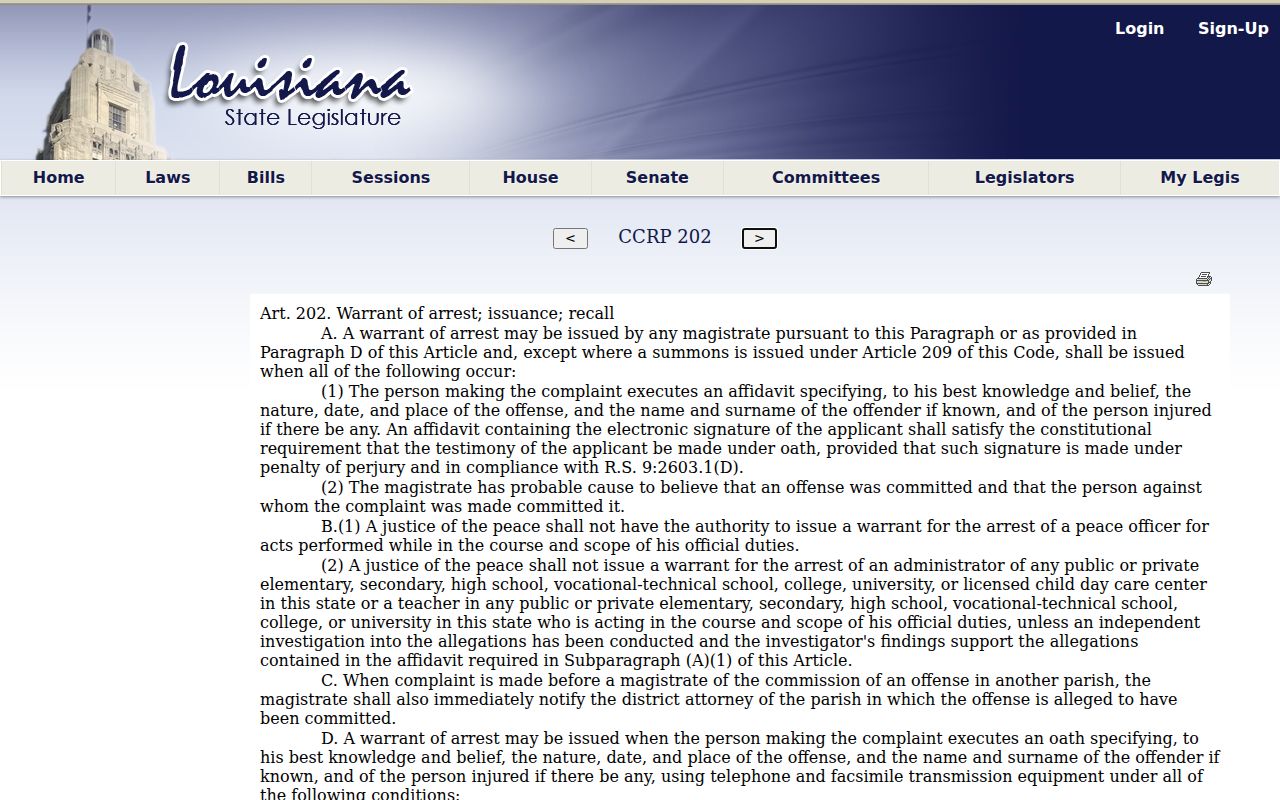
The affidavit is what the reviewing magistrate reads first.
Inside a St. James Parish Arrest Warrant
A St. James Parish warrant carries a set list of elements on its face. These are the fields a clerk or officer reads from the file, and the ones worth writing down yourself.
| Caption and Court | State of Louisiana in the name of the issuing court. |
|---|---|
| Issue Date and Place | When and where the warrant was signed. |
| Person Named | The name or description of the person to be arrested. |
| Offense | The statute described in the affidavit. |
| Command | The instruction to arrest and book the person. |
| Bail Instruction | Any amount or condition the judge set. |
| Signature | The magistrate's authorization on the face of the paper. |
Other record systems tack on fields for service and return. St. James Parish publishes no public format, so ask the issuing court directly which fields it reads.
Who Serves St. James Parish Warrants
One office signs a warrant and another delivers it. In St. James Parish, who serves the paper turns on where the case began.
| Matter | Issuing Route | Serving Route |
|---|---|---|
| District court charge | 23rd JDC and the Clerk of Court | St. James Parish Sheriff's Office |
| Justice of the Peace case | The issuing JP district | Constable or sheriff, per the process |
| Gramercy ordinance | Gramercy Mayor's Court | Gramercy Police process route |
| Lutcher ordinance | Lutcher Mayor's Court | Chief of police process route |
| Traffic failure to appear | The issuing court | Court instructions; OMV handles licensing separately |
| Federal case | Eastern District of Louisiana | U.S. Marshals |
Serving Arrest Warrants in St. James Parish
Deputies serve warrants wherever the person turns up, so a St. James Parish warrant can follow someone past parish lines. The St. James Parish Sheriff's Office handles service across the parish, while a municipal police department covers its own town. The sheriff posts no dedicated warrant division or warrant phone line. Reach the general office instead at (225) 562-2200 or sheriff@stjamessheriff.com. The courthouse campus sits at 5800 LA-44 in Convent, and that official page lists current contact details.

Filed at the courthouse, served wherever the officer finds the person.
St. James Parish JP Warrant Certification
The state Justice Court directory gives every listed office an arrest-warrant certification field. That mark shows whether the office holds the certification. It says nothing about any active warrant. District 1 lists no current contact, and District 4's number shows up only in a dated source. Territorial limits matter too, since JP districts in St. James Parish cover set areas of the parish under La. R.S. 13:2617.
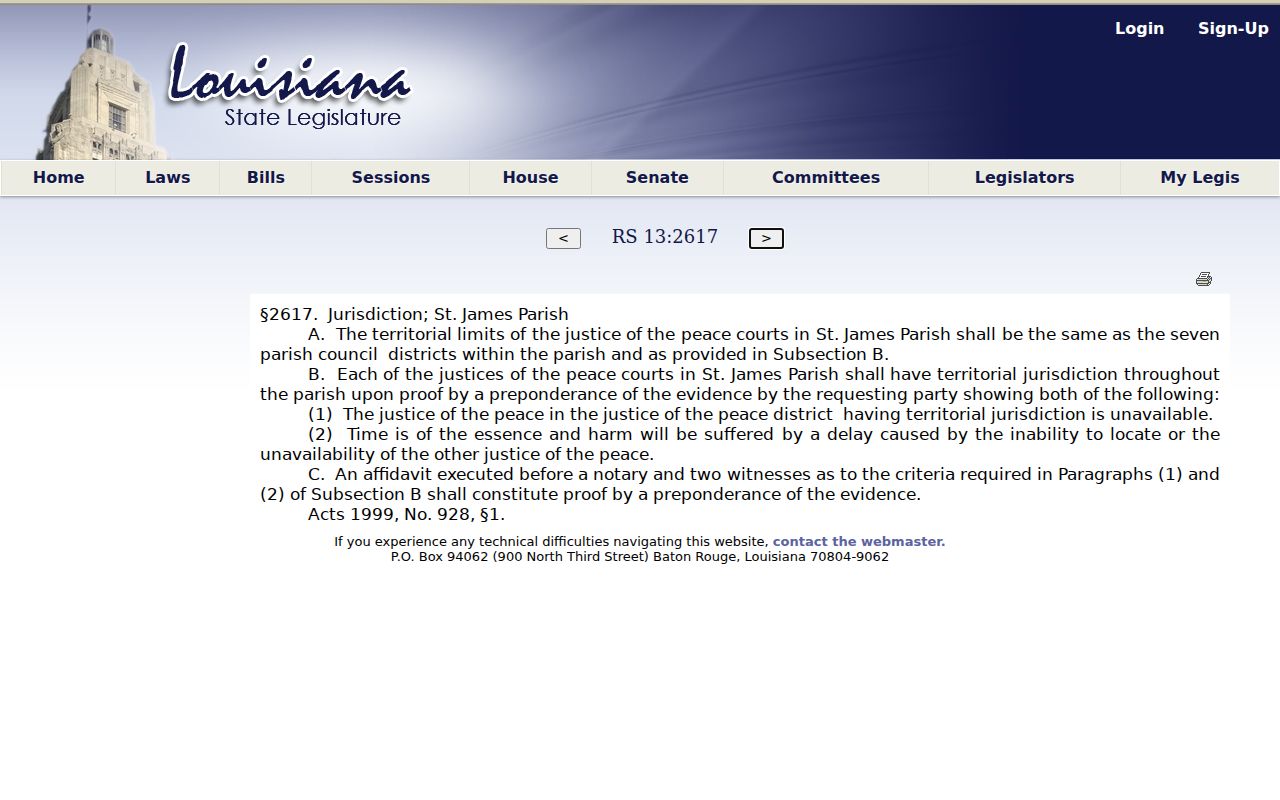
Territorial limits decide which district can act on a ticket.
Comparing Arrest, Summons, and Bench Warrants
Three different papers can bring a person before a St. James Parish court. The differences shape what happens next.
| Paper | What It Does | How It Starts |
|---|---|---|
| Arrest warrant | Authorizes custody on a charge | Sworn probable cause |
| Summons | Orders an appearance without custody | A court filing or citation |
| Bench warrant | Enforces a court obligation | A missed date or unmet condition |
Ignore a summons and a warrant may follow. That failure-to-appear path is among the most common ways people enter the system in St. James Parish.
St. James Parish Booking and Warrant Records
The St. James Parish sheriff's inmate search covers people booked into the parish jail, not warrants. A charge line can mention a failure to appear or a bench warrant. That is a charge description, though, not a warrant status. Someone with an outstanding warrant may never show up in the jail list, and a booking can stay posted long after release. So split the question: the issuing court answers whether a warrant is open, and the sheriff answers who is in custody right now.
If There's an Arrest Warrant for You
Here the records question turns legal. You can appear voluntarily, post bond, or ask the court to recall the warrant. The right first step in St. James Parish depends on the charge and the issuing court.
Important: Talk to a Louisiana attorney before you turn yourself in or pay anything. Driving or being stopped with an active warrant can lead to an arrest on the spot.
Keep every paper the court hands you. A docket entry, a bond receipt, or a written status from St. James Parish is your proof if the record lags behind.
Bail Forms in Louisiana
State law recognizes commercial surety, secured personal, unsecured personal, without-surety, and cash bail, and it lists acceptable cash instruments such as cash, a certified or cashier's check, a qualifying money order, or government bonds.
Those rules describe what a court may accept, not what a specific St. James Parish warrant requires. No public bond schedule for this parish was located, and the clerk's civil fee page is not a criminal bond list. Ask the issuing court for the amount and the payment window.
Federal Arrest Process Is Separate
For federal matters, St. James Parish sits inside the Eastern District of Louisiana. A federal warrant, indictment, or supervised-release issue is filed there, not in the parish clerk's system. Federal dockets run through PACER at a per-page fee with a cap per document, while the free RECAP archive covers whatever has been contributed. The U.S. Marshals Eastern District of Louisiana publishes task force and tip contacts for federal fugitive matters.